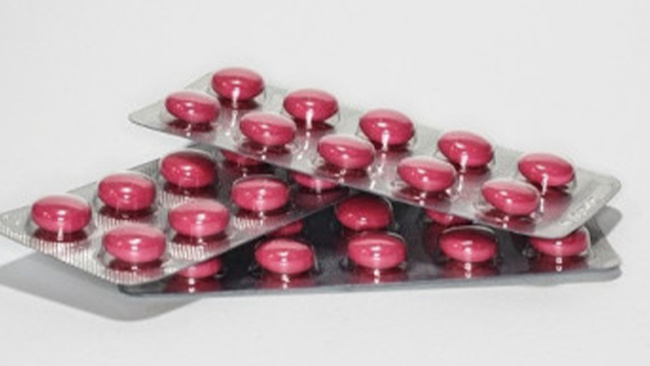
A pill is such a small object, but it can make a huge impression on a consumer. The difference between holding a plain, uncoated pill and a smooth, colorful, glossy tablet with company branding is night and day.
But it’s not just about looks. Film coating is a thin polymer-based layer applied to tablets and other solid dosages that improves functionality and patient acceptability as well.
To dive deeper into the benefits of film coated tablets, we spoke with Damian Hernandez, General Manager of Film Coatings at Colorcon, a leading innovator in pharmaceutical coating technologies.
Key Takeaways
- Film coating enhances the patient experience by improving swallowability, masking unpleasant tastes and odors, and creating a smooth, attractive tablet appearance.
- It significantly improves product stability and shelf life by protecting tablets from moisture, light, and environmental stress.
- Film coatings provide strong branding and customization opportunities through colors, textures, and logos that support product identity and recognition.
- Manufacturers benefit from greater efficiency, including faster production, improved batch consistency, and reduced long‑term costs.
- Film coating also supports advanced functionality, such as controlled release profiles, improved dose accuracy, and reduced contamination or dust during manufacturing.
15 Benefits of Film Coatings in the Pharmaceutical Industry
Hernandez highlighted fifteen benefits of film-coated tablets in particular: a better patient experience, a more stable product, branding opportunities, and efficiency.
|
Benefit |
Value |
|
Enhanced Patient Experience |
Masks unpleasant tastes/odors, improves swallowability, creates smooth and attractive tablets |
|
Improved Product Stability and Shelf Life |
Protects tablets from moisture, light, and temperature variations, extending shelf life |
|
Customization and Branding Opportunities |
Enables unique colors, textures, logos, and formulation adaptations for brand identity |
|
Manufacturing Efficiency |
Increases production speed, ensures batch consistency, and reduces costs |
|
Control Release |
Supports sustained, delayed, or targeted drug release profiles |
|
Improved Dose Accuracy |
Maintains tablet integrity, prevents crumbling, ensures precise dosing |
|
Reduced Cross-Contamination |
Serves as a physical barrier in multi-drug production environments |
|
Minimized Dust Generation |
Reduces friability, minimizing dust for easier processing and improved cleanroom safety |
|
Faster Packaging Speeds |
Film coated tablets are more slippery, reducing friction and improving flow of tablets |
|
Better Moisture Barrier |
Especially beneficial for hygroscopic actives and challenging storage conditions |
|
Prevention of Light-Induced Degradation |
Shields light-sensitive ingredients, improving long-term stability |
|
Improved Transportation & Packaging |
Withstands abrasion and pressure, maintaining tablet quality during transit and handling |
|
Facilitates Printing or Marking |
Provides a uniform surface for imprinting identification and branding information |
|
Taste/Odor Masking |
Coatings can be formulated to mask or enhance taste/smell, improving comfort for patients |
|
Minimize Counterfeiting |
Uncoated tablets are cheap and easy to copy. Specialized coatings and invisible taggants add a layer of protection. |
Enhanced Patient Experience
One of the primary advantages of film coating is its ability to significantly improve the patient experience. “There is a lot it can improve when it comes to patient experience," Hernandez says.
For example, film coatings can:
- Mask unpleasant tastes or odors of medications
Unpleasant taste is one of the biggest barriers to completing treatment in children. In fact, over 90% of pediatricians report that poor taste and palatability are the primary reasons young patients struggle to finish their medication (source).
- Improve tablet swallowability
Research from Colorcon shows that uncoated tablets can take 10 minutes or more to transit from the mouth to the stomach. By contrast, effective film coatings can reduce this time to just 20–30 seconds, making medication significantly easier to swallow (source).
- Provide a smooth, attractive appearance
A patient perception survey found that 77% of patients believe unique pill colors help with easy identification, reduce forgetfulness, and improve overall medication adherence (source).
Improved Product Stability and Shelf Life
Film coatings play a crucial role in protecting pharmaceutical products from environmental factors that could degrade their efficacy. According to Hernandez, coatings can provide:
- Moisture protection
- Resistance to light degradation
- Stability in various temperature conditions
Customization and Branding Opportunities
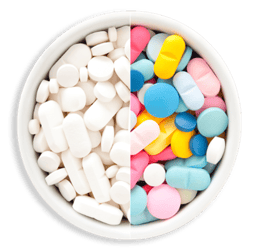 Film coatings offer pharmaceutical companies the ability to differentiate their products visually. This aspect of coating is not just about aesthetics; it's a crucial part of brand identity and can aid product recognition.
"We have a color selector online,” Hernandez notes. “That way, we guide customers to the best solutions based on what they need."
This customization extends beyond color, allowing for:
- Unique textures and finishes
- Incorporation of logos or other identifying marks
- Formulation adaptations for specific market needs
Manufacturing Efficiency
Film coating technology has evolved to enhance the efficiency of pharmaceutical production. Benefits in this area include:
- Increased production speeds
- Consistency across batches and manufacturing sites
- Reduced production costs over time
Are There Any Downsides to Film Coated Tablets?
While film coating offers major advantages it isn’t without limitations.
- Limited Release Control
A conventional film coating may not offer delayed‑release or targeted‑release functionality unless it is specifically engineered for that purpose. Specialty polymers or additional functional layers are required to achieve controlled release, adding complexity. - Additional Formulation Considerations
If a product requires protection from stomach acid or a specific release profile, an enteric or extended‑release coating—may be necessary. These alternatives often demand more sophisticated formulation strategies and manufacturing controls. - Limited Suitability for Splitting or Crushing
Film‑coated tablets—especially those with any functional coating—should not be cut or crushed without professional guidance. Doing so can compromise drug performance or safety. - Added Cost
Film coating does introduce an additional step in manufacturing, which can increase upfront production costs. However, film coating often reduces overall expenses by improving tablet durability, minimizing defects, enhancing patient compliance, and streamlining packaging and handling.
Manufacturers must weigh these limitations against product needs, regulatory considerations, and patient use cases when selecting the ideal coating approach.
Film Coating vs. Other Coating Methods
Film coating differs from other pharmaceutical coating methods in both purpose and application. Compared with sugar coatings, which are thicker and more labor‑intensive, film coatings create a thin, uniform layer that improves swallowability and protects the tablet without adding bulk. They also differ from enteric or modified‑release coatings, which are engineered to control dissolution or protect the drug from stomach acid, whereas standard film coatings typically do not influence where or how quickly a medication is released.
|
Coating Type |
Main Purpose |
Key Benefits |
Typical Use Cases |
Limitations |
|
Film Coating (Immediate release) |
Protective & aesthetic |
Improves stability, swallowability, taste masking, branding, patient compliance, efficient manufacturing |
Most prescription & OTC tablets |
Does not provide delayed or controlled release |
|
Sugar Coating |
Taste, aesthetics, protection |
Pleasant flavor, attractive finish |
Vitamins, older medicines |
Not suitable for larger tablets as it adds bulk, slow/expensive process |
|
Enteric Coating |
Delayed release in intestine |
Protects drug from stomach acid, reduces GI irritation, targeted release |
Acid-sensitive drugs, aspirin, PPIs |
Cannot be split/crushed, slower onset |
|
Extended/Sustained Release Coating |
Modified drug release |
Reduces dosing frequency, stable blood levels |
Chronic conditions, pain management |
Cannot be split/crushed, complex formulation |
|
Uncoated Tablet |
None |
Easy to manufacture, quick release |
Basic formulations |
Prone to taste/odor issues, less protection; reduced patient compliance |
For a full comparison visit our blog on the types of coatings used in the pharmaceutical industry.


.png)