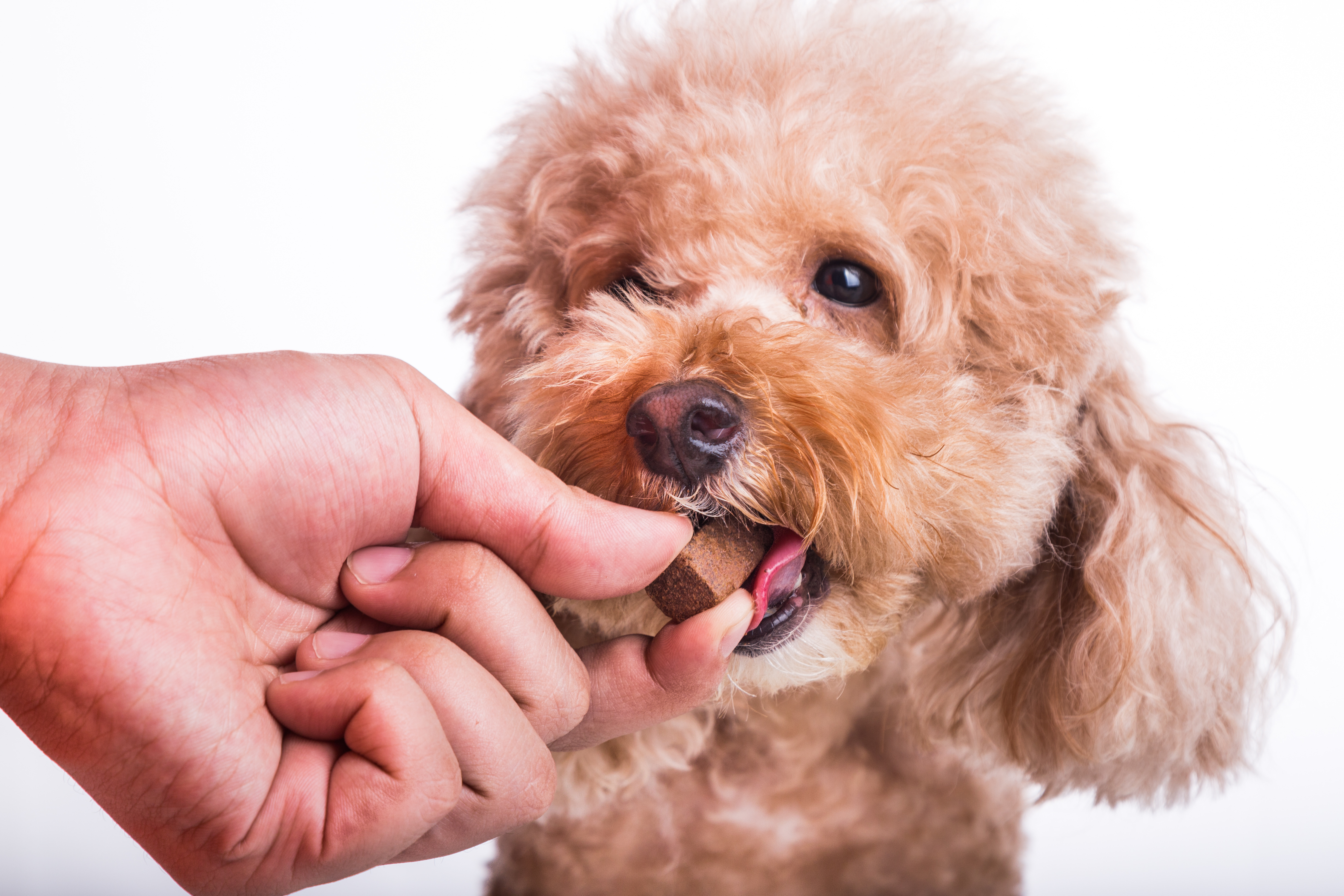
In the evolving landscape of animal health, the demand for veterinary dosage forms that are both effective and palatable have never been greater. Unlike humans, pets cannot be reasoned with when it comes to taking oral delivery formats. When they are voluntarily accepted, whether from a bowl or a pet parent’s hand, they are far more likely to result in consistent dosing and better outcomes. Soft chews and chewable tablets, already favored by pet parents, are critical for compliance and long-term success in veterinary care.
Key Takeaways
- Palatability Drives Compliance: Soft chews and chewable tablets are preferred by pet parents and are critical for ensuring acceptability.
- Sustainability and Label-Friendly Ingredients Matter: A significant majority of pet owners prefer products made with sustainably sourced ingredients. Colorcon’s naturally sourced excipients meet these preferences, offering technical advantages like improved texture, heat stability, and reduced dosing requirements.
- Excipients Enhance Dosage Form Performance: Starch-based excipients such as Starch 1500® and StarCap® improve oil absorption, texture, and shelf-life stability in soft chews.
- Coatings and Pigments Build Trust and Acceptance: Film coatings and pigments not only mask taste and protect from moisture but also help with dose differentiation, flavor cues, and brand recognition. Color selection is driven by pet parent expectations, not animal preference.
- Packaging and Stability Are Essential: To maintain texture and stability, especially in formulas using humectants, soft chews are often packaged in blister packs or foil pouches.
Preferred Formats: Chews, Tablets, Capsules, and Beyond
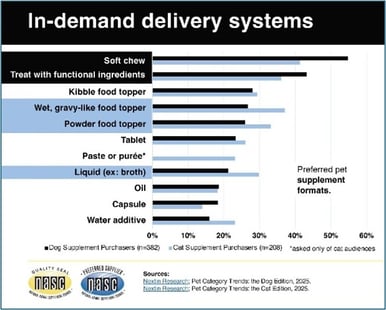 Pet parents and veterinarians rely on a variety of dosage formats to meet diverse needs. Soft chews continue to lead the pet supplement market, but tablets and capsules remain relevant options. Nextin Research surveyed more than 2,400 dog and cat parents, results highlighted these preferences:
- Daily use:
40% of dog supplement purchasers and 32% of cat supplement purchasers administer supplements every day.
- Format preferences:
Soft chews lead the way, preferred by 55% of dog supplement purchasers and 42% of cat supplement purchasers. Tablets (24%) and capsules (17%) reman important, offering variety and flexibility.
These figures show that while soft chews dominate, traditional formats continue to play an important role in ensuring accessibility and choice.
Label-Friendly Solutions offer More Than Taste
Beyond format preferences, ingredient choices play a vital role in product acceptance and sustainability. Nextin Research also notes that 70% of dog owners and 79% of cat owners are more likely to choose products made with sustainably sourced ingredients.
Colorcon’s naturally sourced excipients align with this trend. Free from chemical additives and identity-preserved, they meet regulatory requirements while addressing pet parent preferences for label-friendly products. In addition to taste, these excipients deliver technical advantages such as improved texture and heat stability, enhanced oil absorption and active loading and reduced dosing requirements.
Soft Chews: Texture & Acceptance
Additional survey data shows that 36% of dog owners purchase supplements for joint health, and 43% believe glucosamine supports canine wellness. To address this demand, Colorcon conducted case studies evaluating two glucosamine-based soft chew formulations using Starch 1500 Partially Pregelatinized Starch and StarCap Superior-Flow Starch. Each has its benefits of use depending on the soft chew formulation challenges. Colorcon can work with developers to determine which is the right fit for their formulation requirements.
Key findings included:
-
Both starch-based excipients supported efficient oil absorption and produced soft chews with stable, desirable texture throughout manufacture and storage.
-
Starch 1500 contributed to strong textural integrity and helped maintain firmness and toughness, supporting consistent chew structure over shelf life.
-
StarCap readily incorporated higher oil loads and supported a soft, pliable chew with low toothpack, enhancing palatability and ease of consumption.
-
Texture analysis confirmed that each excipient provided reliable long-term performance, helping deliver soft chews with predictable mouthfeel and dosing acceptance.
Chewable Tablets: Robustness & Flexibility
Colorcon also assessed carprofen formulations incorporating Starch 1500 or StarTab Directly Compressible Starch in combination with MCC. Results demonstrated:
- Enhanced flowability, compressibility, and disintegration properties.
- Direct compression capability, eliminating the need for complex granulation.
- Low friability, rapid disintegration, and consistent performance across varying drug loads.
Enhancing Acceptance Through Coatings and Colors
Film Coatings: Benefits include:
-
Taste masking and moisture protection
-
Controlled or modified release options
-
Safe handling of high-potency ingredients
-
Flavor incorporation for improved acceptance
By ensuring a uniform appearance and consistent quality, coatings enrich the pet parent’s experience and build lasting trust in veterinary products.
Pigments: Elevate animal health dosage forms by:
- Improving dose differentiation
- Reinforcing flavor-to-color cues
- Strengthening brand recognition
Available in synthetic, iron oxide, and natural options, Colorcon pigments can be supplied as custom blends to deliver consistent batch-to-batch color and meet regional regulatory preferences.
Final Thoughts
Whether developing a chewable tablet or a soft chew supplement, excipients, coatings, and pigments play a pivotal role in creating veterinary products that are effective, sustainable, and easy to love. By addressing the unique needs of companion animals and their caregivers and aligning with consumer trends for wellness and label-friendly solutions, these innovations ensure that veterinary dosage forms deliver not only beneficial performance but also palatability and compliance.
Frequently Asked Questions
- What is your recommendation to maintain texture of soft chews during the shelf life? Especially with formula that use humectant that attracts moisture?
Soft chews are commonly packaged using individual blister-type packaging or aluminum foil pouches to minimize environmental exposure that could impact long term texture and stability. Use of excipients with low water activity and/or moisture scavenging properties, such as Starch 1500 and StarCap, may also be useful. -
What is the importance of adding color pigments in an animal health dosage form?
Animals are not influenced by the color of a dosage form; color selection is driven by pet‑parent expectations. Pet parents associate specific flavors with corresponding colors; therefore, a product labeled “meat flavor” is expected to appear red, pink, or brown.
- Will the colors (pigments) react with glycerin, starches, and many other botanicals found in soft chews and tablets over time?
Colorcon regularly conducts stability testing of the pigments with commonly used excipients. Our synthetic and naturally sourced pigments have good presence of use in a variety of animal health dosage forms.
- Do you expect any change in functionality of Starch 1500 or StarCap if exposed on high temperature (e.g., 100C)?
Starch 1500 and StarCap exhibits thermal stability up to 121°C. Thus they will not be negatively affected by higher process temperatures typically seen in soft chew manufacturing. - Are film coatings used for animal health products?
Yes, as in human healthcare, film coating provides a wide range of benefits and functional advantages. These include taste masking, moisture protection, and applications such as delayed or modified release. In addition, film coatings can serve as flavor carriers, enabling the deposition and adhesion of additional flavor components onto the surface of the substrate.
.png)
.png)