This article was originally published in the PharmTech Manufacturing Trends E-book, May 2026.
Osmotically controlled oral drug delivery systems deliver drugs at a controlled, predictable rate, independent of many physiological variables that challenge conventional modified‑release technologies. First commercialized decades ago, osmotic pump tablets—particularly push–pull osmotic pump (PPOP) systems—remain robust, once‑daily oral dosage forms with high in vitro–in vivo correlation.
Renewed interest in osmotic technology is driven by two converging trends: growing chronic disease prevalence increases demand for consistent oral release and reduced dosing frequency, while advances in excipient design address historical barriers such as manufacturing complexity and scale‑up risk. Innovative formulated excipient systems are reshaping how osmotic formulations are developed, transferred and manufactured.
Why Osmotic Systems Remain Relevant
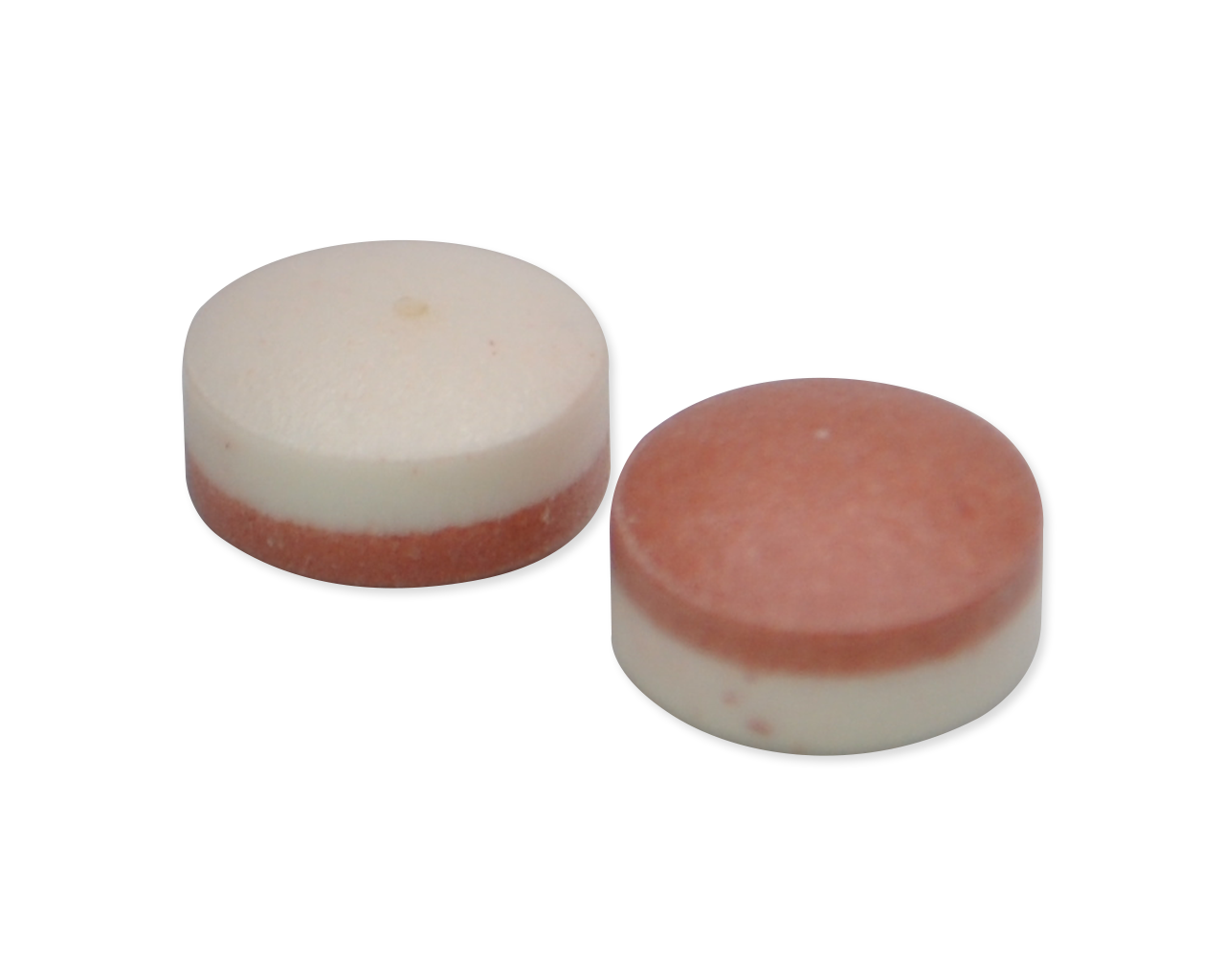
The principle behind an osmotic tablet is straightforward: water passes through a semipermeable membrane, hydrating the core. Mechanical pressure from a swelling polymer then pushes the drug out through a delivery orifice. In push–pull designs, a dedicated push layer expels a separate drug‑containing pull layer, enabling zero‑order release over prolonged periods.
Osmotic systems offer several advantages over other approaches for formulating controlled release tablets, including release rates that are largely independent of gastrointestinal pH and motility, minimal food effects, and strong potential for once‑daily dosing. These benefits are particularly valuable for Active Pharmaceutical Ingredients (APIs) whose release from hydrophilic or hydrophobic matrices are sensitive to dissolution conditions or variability in gastrointestinal transit.
The Manufacturing Challenge of Traditional Osmotic Formulations
Despite their performance benefits, osmotic tablets are often perceived as complex to develop and manufacture. Conventional PPOP formulations typically require:
- Multiple individual raw materials in the push layer (high molecular weight polymers, osmotically active agents, pigments, lubricants).
- Tight control of particle size and blend homogeneity to avoid segregation.
- Solvent‑based granulation, with accompanying solvent reclamation and drying steps.
- Extensive formulation screening to achieve robust tabletability and pump performance.
In addition, a semipermeable membrane coating (commonly cellulose acetate) adds variables such as solvent selection, solids content, spray conditions and membrane thickness. These factors can extend development timelines and complicate technology transfer to commercial scale. As a result, formulators may view osmotic dosage forms as technically attractive but operationally demanding.
A Shift Toward Fully Formulated Excipient Systems
Recent advances in excipient design aim to change this perception. PPOP development and manufacturing can be simplified by incorporating ready-to-use formulated controlled release systems into the tablet design. Corelease™ OPL and Corelease™ CA exemplify this approach, targeting the two most critical PPOP components: the push layer and the semipermeable membrane.
Corelease OPL is a fully formulated push‑layer system combining a high molecular weight polyethylene oxide (PEO) swelling polymer with an osmogen and pigment in a non‑segregating blend.
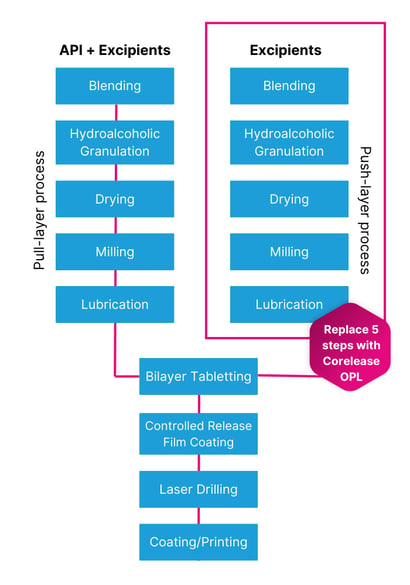
From a development and manufacturing standpoint, this offers several advantages:
- Reduced formulation complexity: The push layer is provided as a fully formulated dry powder, ready to use in tablet manufacturing.
- Direct‑to‑hopper processing: Eliminates multiple handling and processing steps.
- Avoidance of solvent granulation: Reduces processing time and equipment requirements; eliminates cost, safety, and environmental concerns of solvent use.
- Improved scale‑up robustness: Consistent particle size distribution helps minimize segregation risk during high‑speed tableting.
- Customizable: Formulations can be tailored to match customer requirements.
Example Use Case
Mirabegron; a β3‑adrenergic receptor agonist for overactive bladder and marketed as a matrix tablet. As a weak base and BCS Class III drug, it has pH‑dependent solubility (higher in acidic conditions), making release sensitive to GI location. Its bioavailability varies with dose, gender, and diet.
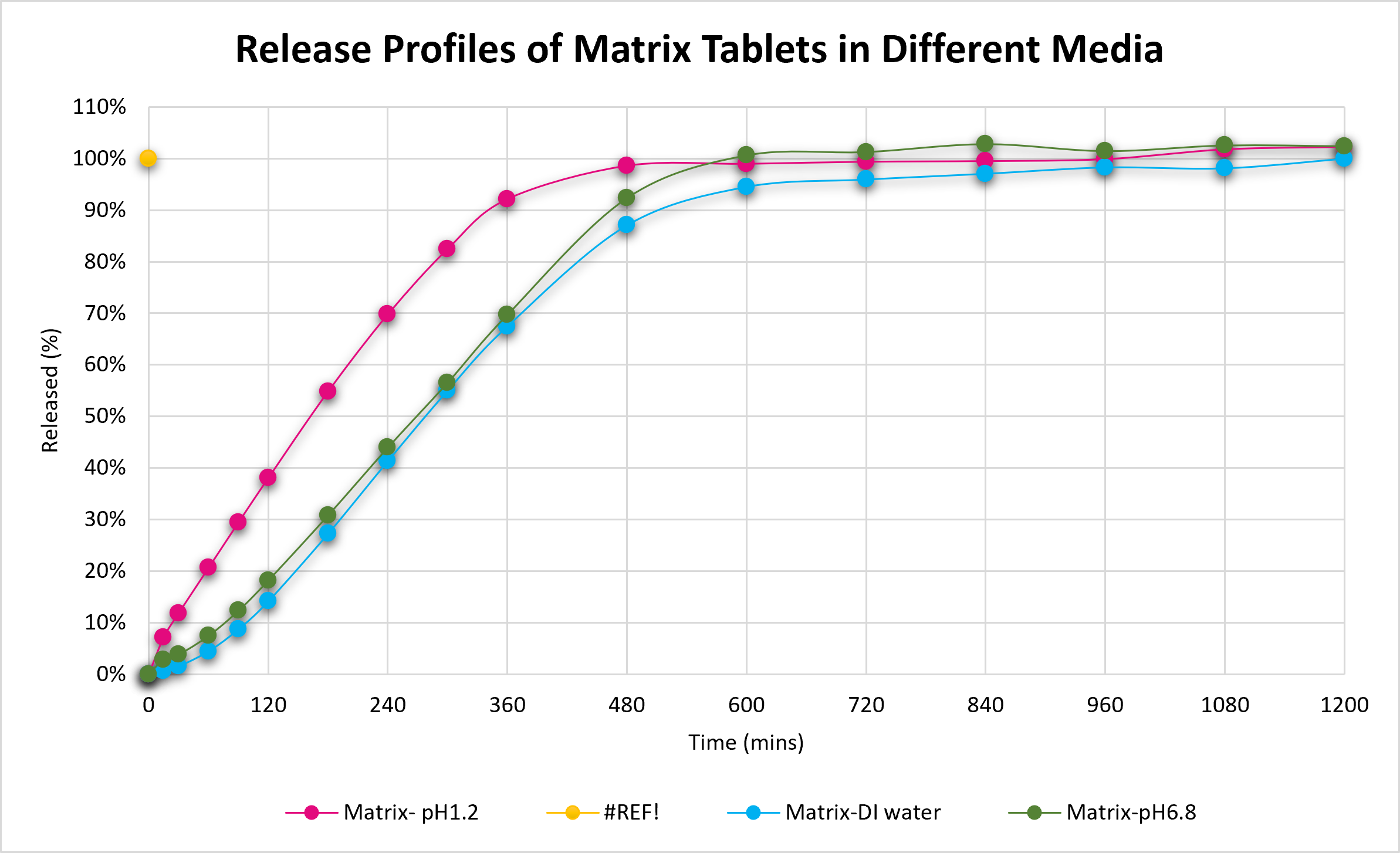
Colorcon manufactured mirabegron PPOP tablets using Corelease OPL and compared them with a commercially available mirabegron matrix tablet. Dissolution testing in media of varying pH (Figure 1) showed the marketed matrix tablet had pH‑dependent release, with faster release in pH 1.2 HCl.
Figure 1: Release Profiles of Marketed Tablets in Different pH Media
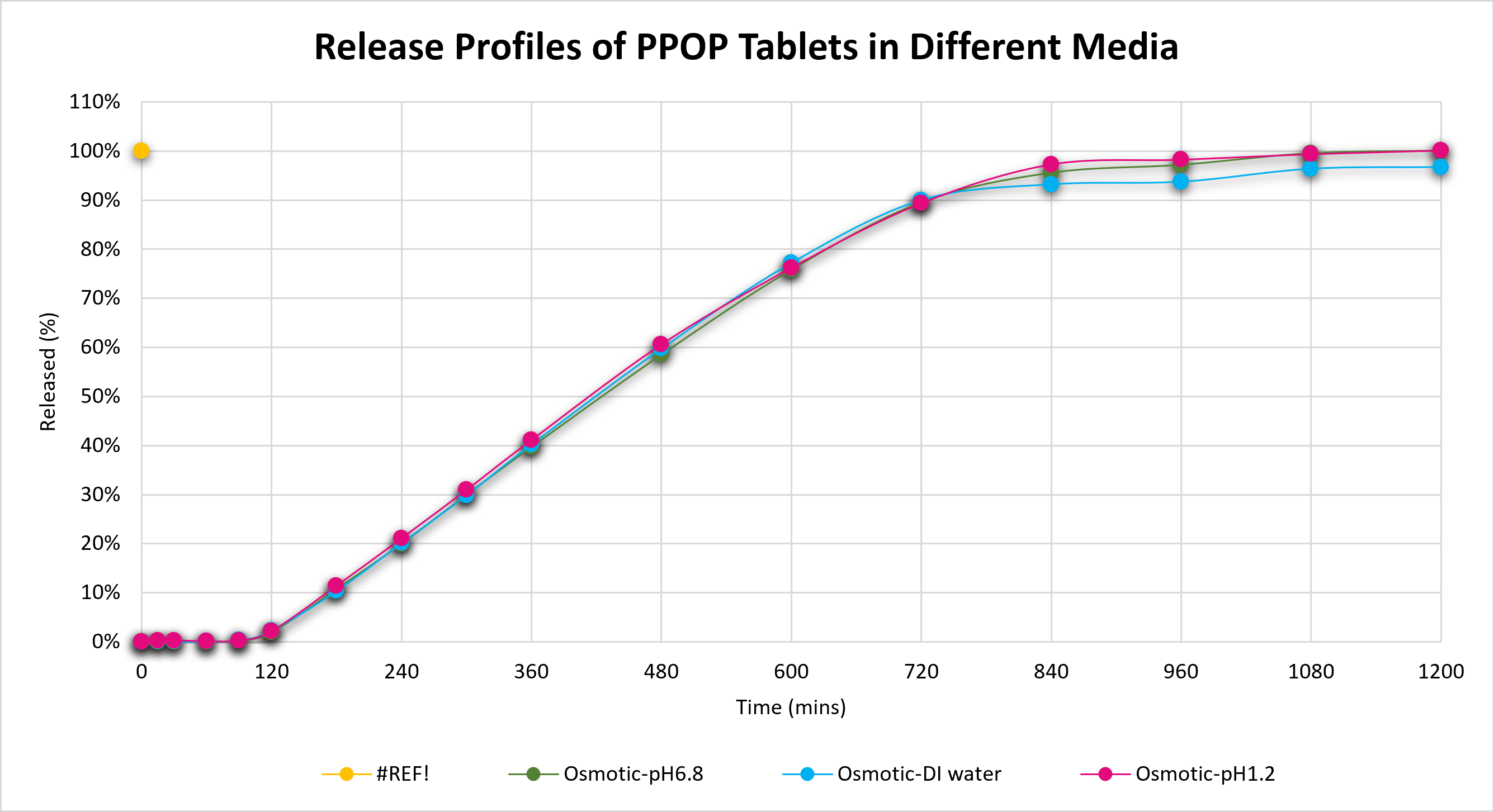
In contrast, the Corelease OPL push–pull osmotic pump showed comparable release across all three media (Figure 2), demonstrating consistent release for compounds like mirabegron with pH‑dependent solubility. Reformulation as an osmotic system enables robust, once‑daily sustained release with reduced food and pH effects.
Figure 2: Release Profiles of PPOP Tablets in Different PH Media.
Streamlining Membrane Coating
The semipermeable membrane controls osmotic drug release by regulating water entry into the core; small changes in membrane composition or thickness can significantly affect hydration rate and drug release profile.Corelease CA is a ready‑to‑use cellulose acetate‑based coating system for osmotic applications, reducing the experimental space typically associated with membrane development.
Key advantages include:
- Tailorable drug release profiles with customized formulations.
- Reproducible coating performance across scales.
- Simplified process development, with well‑defined operating ranges.
- Reduced risk during technology transfer, particularly when moving from pilot to commercial equipment.
When used together with Corelease OPL, Corelease CA supports a more modular development strategy for PPOP systems.
Reducing Supply Chain and Operational Burden
Beyond formulation performance, excipient consolidation has important operational implications. Traditional osmotic formulations may require sourcing and qualifying multiple excipients from several suppliers, each with its own regulatory documentation, testing strategy and change control requirements.
Using a single supplier for both the push layer and membrane coating offers tangible benefits:
- Fewer raw materials to qualify and manage.
- Reduced incoming QC testing and documentation.
- Simplified supplier audits and change notifications.
- Lower overall supply‑chain risk.
In an environment where resilience and operational efficiency are increasingly important, these factors can influence platform selection as much as drug release performance.
Conclusion
Osmotic delivery systems continue to offer compelling advantages for controlled release oral dosage forms, particularly when consistent release profiles and robustness to physiological variability are required. Historically, their adoption has been limited by development and manufacturing complexity.
Innovative, fully formulated excipient systems such as Corelease OPL and Corelease CA help address this by simplifying push‑layer formulation, standardizing membrane coatings, and reducing the number of raw materials and suppliers involved—supporting faster development, smoother scale‑up, and more reliable manufacturing.
For formulation scientists considering osmotic delivery, whether for new molecular entities or lifecycle management of established APIs, excipient innovation is enabling a more practical and scalable pathway from concept to commercial product.