The osmotic pump technology market is anticipated to grow at a rate of 8% from now until 20341. These innovative systems offer a distinct advantage over traditional oral medications by enabling controlled drug release and reducing the frequency of dosing, making them highly patient-centric.
Benefits of PPOP Systems
- Zero-Order Drug Release: delivering a consistent and controlled release of the drug over time.
- Food and Gastric pH Independent: meaning efficacy remains unaffected by food intake and the variations in stomach acidity.
- Reduced Patient-to-Patient Variability: ensuring reliable drug performance across patient population.
- Strong In-Vitro/In-Vivo Correlation: which facilitates accurate prediction of drug behavior in the body.
- Once-Daily Dosing: simplifying treatment regimens and enhancing patient compliance.
Characteristics of Ideal Drug Substances for PPOP
Drugs suitable for PPOP formulations are typically highly potent and have a biological half-life between 1 and 6 hours, with a solubility between 5.0 to 300 mg/mL. Examples include:
-
Nifedipine
-
Glipizide (see our technical case study)
-
Carbamazepine
-
Theophylline
-
Mirabegron (see our technical case study)
Key Components of a PPOP System
Formulation may seem complex but fully formulated excipients are available to simplify and streamline the manufacturing process. Essentially a PPOP will consist of the following:
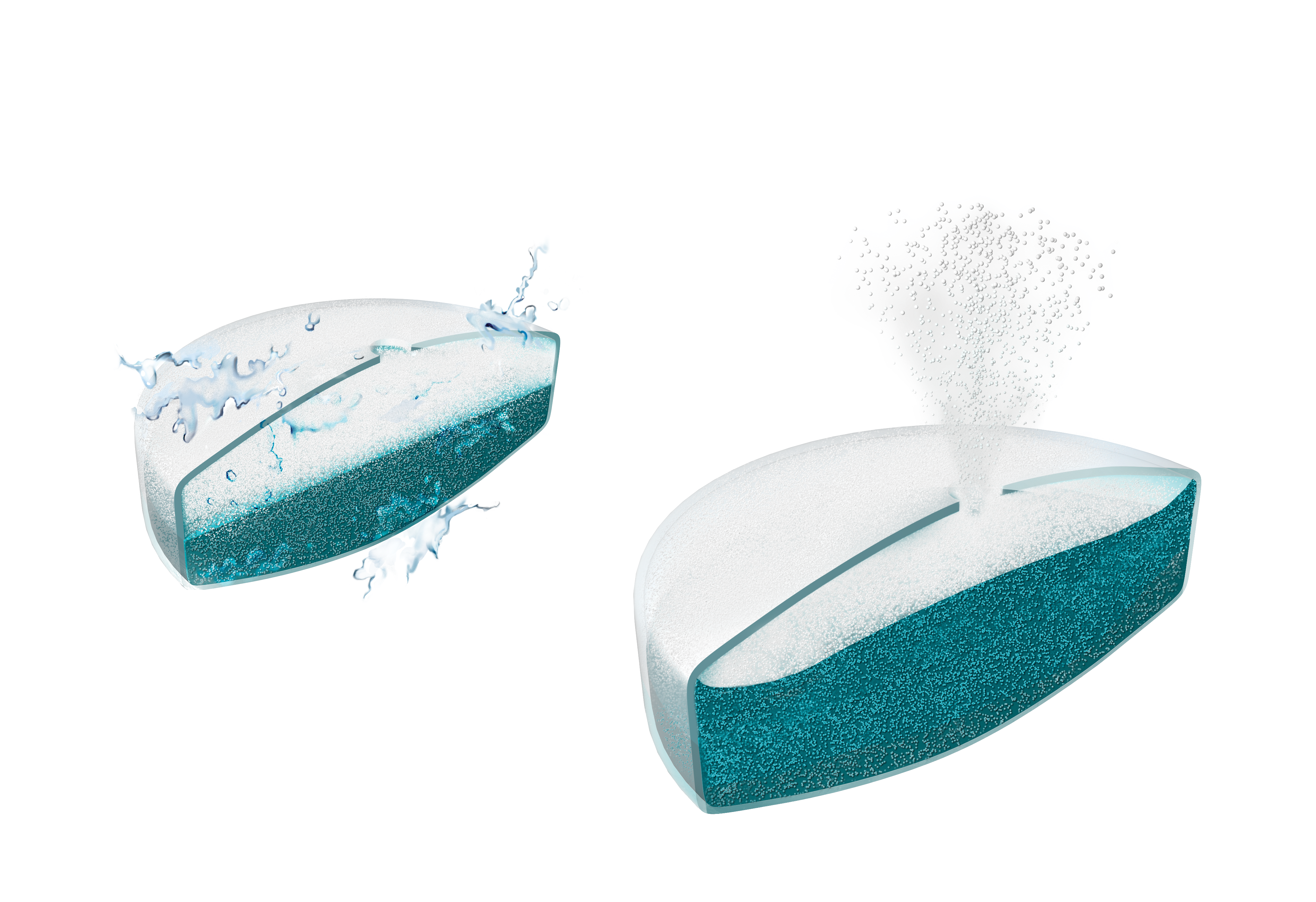
- Drug (“pull”) Layer: which contains the active pharmaceutical ingredient, designed for controlled release.
- Osmotic (“push”) Layer: which contains agents that create an osmotic gradient to drive drug release. Absorbs water, swelling the medication to “push” the drug out through the orifice. (e.g., Corelease OPL™)
- Semipermeable Membrane: which allows water to enter and is critical for controlling the rate of the drug release. (e.g., Corelease CA™).
- Orifice: A precisely drilled hole where the drug is released at a steady rate.
.png?width=1400&height=800&name=Osmotic%20Tablet%20(1).png)
Brand Identity
A pigmented immediate release top film coating may be applied to provide additional benefits, including branding, product differentiation and improved stability. An imprint or branding may be included for product recognition.
Summary
Push-Pull Osmotic Pump systems offer a proven approach to consistent and controlled medication release. With extensive experience in controlled release technologies, Colorcon can help simplify PPOP formulation and manufacture through fully formulated systems such as Corelease OPL for the osmotic push layer and Corelease CA for the semipermeable membrane. These solutions are designed to reduce complexity, support reliable performance and help development teams move faster from formulation to scale-up. To explore whether PPOP technology is right for your project, contact your Colorcon representative or request a sample to begin evaluation.

Reference
1. Osmotic Pump Market Growth – Trends & Forecast 2024-2034, Future Market Insights (2024)
Frequently Asked Questions
-
What is a Push-Pull Osmotic Pump (PPOP) dosage form?
A PPOP dosage form is an oral controlled-release system that uses osmotic pressure to deliver medication at a steady, predictable rate over time.
-
How does a push-pull osmotic pump work?
Water enters the tablet through a semipermeable membrane, causing the push layer to swell and drive the drug out through a small delivery orifice.
-
What types of drugs are suitable for PPOP systems?
PPOP systems are typically suited to potent drugs with a short biological half-life and appropriate solubility for controlled delivery.
-
What are the main benefits of PPOP drug delivery?
Key benefits include consistent drug release, reduced dosing frequency, lower patient-to-patient variability, and performance that is less affected by food or gastric pH.
-
Can PPOP formulations support once-daily dosing?
Yes. PPOP technology can support extended, controlled drug release, helping to simplify dosing schedules and improve patient adherence.


.png)