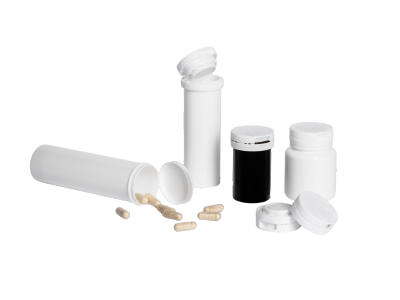
Dietary supplement packaging plays a critical role in protecting product quality, supporting regulatory compliance, and building consumer trust. You can manufacture the best dietary supplement in the world but if the packaging falls short, quality can be affected and consumer trust diminished.
As the market grows, packaging decisions must balance label requirements, tamper evidence, child-resistant features, moisture and oxygen protection, sustainability expectations, and format choice across bottles, blisters, pouches, jars and other options. These choices are becoming more important as the global dietary supplement packaging industry is projected to grow from USD 12.1 billion in 2025 to USD 21.5 billion by 2035, at a CAGR of 5.8% (source). This article explores the key factors brands should consider when selecting effective dietary supplement packaging.
Key Takeaways
- Effective dietary supplement packaging helps protect product quality, potency and shelf life by reducing exposure to moisture, oxygen, heat and light.
- FDA dietary supplement packaging requirements focus on compliant labeling, including the Supplement Facts panel, ingredient list, directions for use, required warnings and claim disclaimers.
- The right supplement packaging format depends on the dosage form, barrier needs, consumer use case, e-commerce durability, and compatibility with desiccants, closures, seals and coatings.
- Tamper-evident features and child-resistant closures can support consumer safety, build trust and help meet specific requirements for higher-risk products.
- Sustainable supplement packaging should balance recyclability, reduced material use, and responsible claims with proven product protection and regulatory compliance.
FDA Regulations for Dietary Supplement Packaging
In the US, dietary supplement packaging and labeling are regulated under the Federal Food, Drug, and Cosmetic Act (FDA), as amended by the Dietary Supplement Health and Education Act (DSHEA) of 1994. The core labeling requirements sit within 21 CFR Part 101, while current good manufacturing practice (cGMP) requirements for manufacturing, packaging, labeling and holding operations are set out in 21 CFR Part 111.
Importantly, the FDA does not pre-approve dietary supplement labels before products go to market. This means brands are responsible for ensuring every claim, label statement, ingredient declaration, warning and package presentation is accurate, compliant and not misleading.
Packaging teams need to consider regulatory requirements early, not as a final artwork check. This includes reviewing the Supplement Facts panel, principal display panel information, structure/function claim disclaimer, allergen declarations and whether the product requires any specific warnings. Recent allergen guidance also underlines why this matters: in January 2025, FDA issued updated guidance on major food allergen labeling, including questions related to dietary supplements. Brands should also remember that facilities involved in manufacturing, packaging, labeling, or holding dietary supplements may be subject to registration requirements under 21 CFR 1.227.
Required Label Elements: What Must Appear on a Dietary Supplement Package?
A dietary supplement label needs to present the right information in the right place. The Principal Display Panel (PDP) should clearly identify the product as a dietary supplement and state the net quantity of contents, while the Supplement Facts panel must provide serving size, servings per container, dietary ingredients, amounts per serving, and percent daily value where required.
Other ingredients, the name and address of the manufacturer, packer, or distributor, directions for use, allergen information, and any required warning statements must also be reviewed as part of the label development process. If the product uses a structure/function claim, the required FDA disclaimer must appear on the label, and the claim must be truthful, substantiated, and not imply disease treatment or prevention.
|
Label Element |
Required? |
Regulatory Reference |
Notes |
|
Statement of identity ('Dietary Supplement') |
Yes |
21 CFR 101.3 |
Must appear on the Principal Display Panel (PDP) |
|
Net quantity of contents |
Yes |
21 CFR 101.105 |
Must appear on PDP |
|
Supplement Facts panel |
Yes |
21 CFR 101.36 |
Replaces Nutrition Facts for supplement products |
|
Ingredient list |
Yes |
21 CFR 101.4 |
Inactive/other ingredients listed outside Supplement Facts panel, in descending order |
|
Name and address of manufacturer/distributor |
Yes |
21 CFR 101.5 |
Domestic and foreign manufacturers included |
|
Directions for use |
Yes |
21 CFR 101.36(d) |
Serving size and frequency must be clearly stated |
|
Structure/function claim disclaimer |
If applicable |
21 CFR 101.93 |
Required if product makes a structure/function claim: 'This statement has not been evaluated by the FDA...' |
|
Allergen declaration |
If applicable |
FALCPA / FDA 2024 guidance |
Nine major allergens (incl. sesame since 2023) must be declared |
|
Warning statements |
If applicable |
21 CFR 101.17 |
Iron-containing supplements require specific warning language |
|
Child-resistant closure |
If applicable |
16 CFR Part 1700 (PPPA) |
Required for products with 250mg or more elemental iron per package |
Packaging Formats for Dietary Supplements
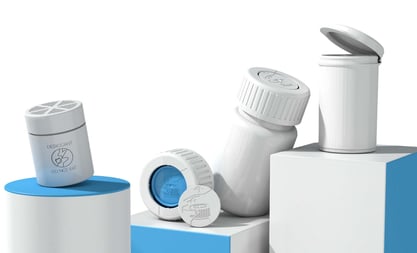 Dietary supplements are sold in a wide range of packaging formats, from plastic and glass bottles to blister packs, pouches, stick packs, jars and canisters. Plastic bottles, particularly HDPE and PET, remain one of the most common choices because they are lightweight, cost-effective, durable and suitable for tablets, capsules, gummies and powders.
Alternative formats may be more appropriate depending on the product, brand positioning, and route to market. Blister packs can support unit-dose convenience and tamper evidence, while pouches and stick packs are well suited to powders and on-the-go use. Glass bottles may be selected for liquid formats, oils, premium products or light-sensitive ingredients.
Format choice should also be guided by barrier needs, including protection from moisture, oxygen, and light, as well as compatibility with the dosage form, excipients, desiccants, closures, and seals. E-commerce adds another layer of complexity, as packaging must withstand shipping, protect the product through multiple handling points, and still deliver a quality experience. The best format is not simply the most familiar option, but the one that protects product quality, supports compliance and meets consumer expectations.
|
Format |
Best For |
Key Benefits |
Regulatory Notes |
|
Plastic bottles (HDPE/PET) |
Tablets, capsules, powders |
Cost-effective, lightweight, moisture protection, design flexibility |
Tamper-evident seals and child-resistant closures available; iron-containing products require CRC under PPPA (16 CFR Part 1700) |
|
Glass bottles |
Liquids, oils, premium positioning |
Inert, UV-protective (amber/cobalt), strong sustainability perception |
Heavier and more fragile than plastic; appropriate for sensitive actives |
|
Blister packs |
Tablets, capsules |
Unit-dose convenience, tamper evidence, extended shelf life per dose |
Child-resistant variants available; often used in clinical and retail settings |
|
Pouches (stand-up/stick packs) |
Powders, single-serve formats |
Resealable options, on-the-go convenience, lower material use |
Barrier properties critical for moisture-sensitive ingredients |
|
Jars/canisters |
Powders, gummies, bulk formats |
Large capacity, easy scooping, shelf visibility |
Desiccants commonly included; moisture and oxygen barriers important |
Tamper Evidence and Child-Resistant Packaging
Tamper evidence and child-resistant packaging both help to protect consumers, but they are not the same requirement. For dietary supplements, tamper-evident packaging is not generally mandated at federal level in the same way it is for many over-the-counter drugs. Even so, it is widely treated as an industry best practice because it helps reassure consumers that the product has not been opened, altered or contaminated before purchase. Common options include induction seals, shrink bands, breakaway caps and other visible features that show if a package has been disturbed.
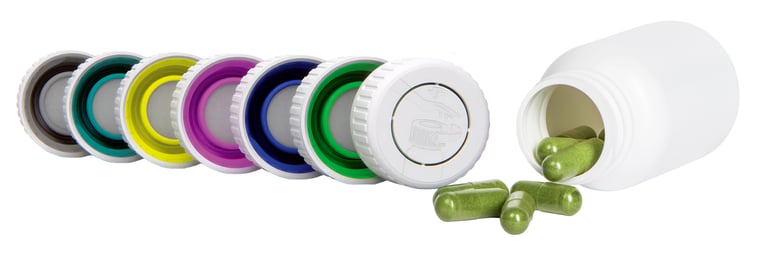
Child-resistant closures are more specific. Under the Poison Prevention Packaging Act, certain products must use special packaging designed to be difficult for young children to open while remaining accessible for adults.
When selecting a closure, brands should consider the active ingredients, total package contents, target consumer, ease of use and any e-commerce handling requirements. The right approach supports safety, strengthens consumer confidence and helps protect brand reputation.
How Packaging Protects Product Quality and Potency
The primary role of dietary supplement packaging is to protect product quality from the moment it leaves production until the consumer takes the final dose. According to Innova Market Insights, the top criterion in supplement packaging is protection from heat, light, and moisture to help ensure potency. This is especially important for ingredients that are sensitive to environmental exposure, such as probiotics, omega-3 oils, botanicals, enzymes, and certain vitamins. Moisture ingress can affect tablet hardness, disintegration, appearance, and ingredient stability, while oxygen exposure may accelerate oxidation and reduce product performance over time.
Effective packaging should be selected alongside the formulation, dosage form and intended shelf life. High-barrier bottles, blister films, pouches, liners, desiccants, oxygen absorbers and light-protective materials can all help reduce exposure, but the right choice depends on the product’s stability profile.
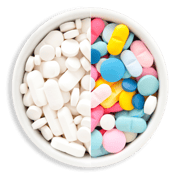 Tablet film coatings can also complement packaging by acting as an additional barrier layer, helping to manage moisture uptake, improve appearance, and support handling during manufacturing, packing, shipping and use. However, packaging decisions should not rely on assumptions. Shelf-life validation and stability testing provide the data needed to confirm whether the chosen format protects potency, quality, and consumer experience throughout the product’s lifecycle.
Sustainable Packaging: Consumer Expectations and Compliance
Sustainability is becoming a practical packaging requirement for dietary supplement brands, not just a brand preference. Consumers increasingly expect packaging that is recyclable and, responsibly sourced, while regulators are placing more scrutiny on material choices and environmental claims. According to Auri Nutra, surveys in 2025 show that 70% of supplement buyers prefer recyclable packaging, while separate consumer research found that 82% of consumers are willing to pay more for products with sustainable packaging. This makes sustainability a commercial consideration as well as an environmental one.
For supplement manufacturers, this shift is driving interest in recycled HDPE bottles, mono-material pouches, compostable materials, refill formats, reduced secondary packaging and designs that cut excess headspace without compromising product protection. However, sustainable packaging must still maintain barrier performance, label readability, tamper evidence, child resistance where required and overall product stability.
Regulatory developments are also moving quickly. In Europe, the Packaging and Packaging Waste Regulation (PPWR) will apply from August 2026, setting new requirements for packaging reduction, recyclability, recycled content, and waste prevention. Brands must be cautious with terms such as “compostable,” “biodegradable,” or “plastic-free.” These claims need clear substantiation, such as recognized compostability standards, and should not mislead consumers about how the packaging should be disposed of. The strongest approach is to combine measurable sustainability improvements with proven product protection and compliant communication.
Colorcon's Role in Supplement Packaging
Colorcon supports supplement manufacturers by helping connect formulation, coating, and packaging decisions early in development. Excipient choice can influence moisture uptake, tablet strength, disintegration, appearance and overall stability, so it should be considered alongside the intended pack format, desiccant strategy, closure system, and shelf-life requirements.
Film coatings can also play an important supporting role, particularly where products need added protection from moisture, improved handling during packaging, or a consistent, high-quality finish on shelf. While packaging provides the primary external barrier, moisture-barrier tablet coatings can complement bottles, blisters, pouches and other formats by adding another layer of protection at tablet level. To select the right combination for your product, contact a Colorcon technical expert for formulation and coating guidance.

Related Resources
- The Role of Pharma Excipients in Enhancing Drug Stability and Absorption
- Drug Stability Testing
- Benefits of Film Coating Medical Tablets
Frequently Asked Questions
-
What are the FDA requirements for dietary supplement packaging?
FDA requirements for dietary supplement packaging focus mainly on accurate, compliant labeling and good manufacturing practices. Brands must follow 21 CFR Part 101 for labeling, including the Supplement Facts panel, and 21 CFR Part 111 for manufacturing, packaging, labeling, and holding operations.
-
Is tamper-evident packaging legally required for dietary supplements?
Tamper-evident packaging is not generally required by federal law for dietary supplements, but it is widely used as a best practice. Seals, shrink bands, and breakaway caps help show whether a product has been opened or altered before purchase.
-
Which supplement formats require child-resistant closures?
Child-resistant closures are required for certain supplements that present a poisoning risk, most notably products containing 250mg or more of elemental iron per package. These requirements are covered under the Poison Prevention Packaging Act and 16 CFR Part 1700.
-
What must be included on a dietary supplement label?
A dietary supplement label should include the statement of identity, net quantity of contents, Supplement Facts panel, ingredient list, manufacturer or distributor details, directions for use, and any required warnings, allergen declarations, or structure/function claim disclaimers.
-
What is the difference between nutritional supplement packaging and dietary supplement packaging?
The terms are often used interchangeably, but “dietary supplement” has a specific regulatory meaning in the US. Nutritional supplement packaging may be used more broadly to describe packaging for vitamins, minerals, protein powders, functional nutrition products, and related wellness products.
.png)