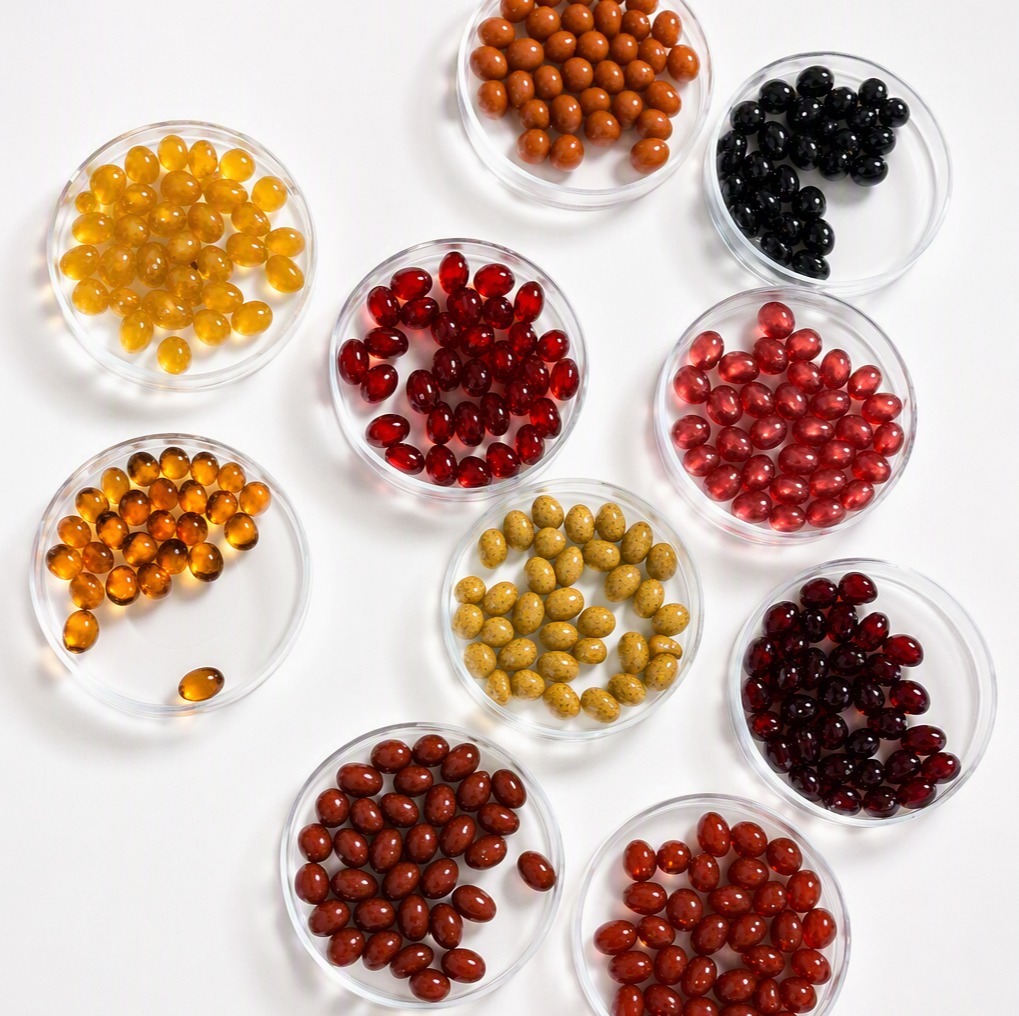
Softgel capsules remain one of the most popular delivery systems for vitamins, minerals, and active nutraceutical ingredients (ANIs). According to Nutraceuticals World's Supplement Business Report, softgels accounted for 12.5% of supplement sales in 2024, making them one of the industry's leading delivery formats. Their smooth appearance, ease of swallowing, and ability to deliver oils and other challenging substances makes them a preferred choice for both manufacturers and consumers.
Particularly well-suited for fat-soluble vitamins and lipid-based ingredients such as omega-3s, CoQ10, and vitamins A, D, E, and K, softgels can help protect sensitive ingredients while delivering a premium consumer experience. However, developing a successful softgel supplement requires careful consideration of formulation, stability, packaging, and appearance to ensure long-term product performance.
Key Takeaways
- Softgels are an effective delivery system for oil-based actives, fat-soluble vitamins, and other ingredients that are difficult to formulate into traditional dosage forms.
- Stability should be considered from the earliest stages of development to protect sensitive ingredients from oxygen, moisture, heat, and light.
- Effective packaging, including oxygen scavengers and high-barrier bottles, can help preserve softgel quality, potency, and shelf life.
- Color plays an important role in softgel differentiation, brand appeal, clean-label positioning, and protection of light-sensitive ingredients.
- Colorcon's Innovation Center provides pilot-scale softgel, gummy, and soft chew capabilities to help accelerate product development and dosage form selection.
 Confirm Softgels Are the Right Delivery System
Softgels offer unique advantages for ingredients that are difficult to formulate into traditional tablets or hard capsules. Oil-based actives, poorly water-soluble compounds, and fat-soluble vitamins can often benefit from softgel delivery systems due to their ability to encapsulate liquid or semi-solid fills.
When evaluating a new product, formulators should consider:
-
- The physical properties of the active ingredient
- Desired bioavailability characteristics
- Consumer preferences
- Product positioning
- Manufacturing and scalability requirements
Choosing the right delivery system early can help avoid costly reformulation efforts later in development.
 Prioritize Stability from the Beginning
Many vitamin and nutraceutical ingredients are sensitive to oxygen, moisture, heat, and light, making stability a critical consideration throughout a product's shelf life. Exposure to these factors can affect potency, appearance, and overall product quality. Ingredients such as omega-3 oils and fat-soluble vitamins are especially vulnerable to degradation if not properly protected. While softgels can provide an effective barrier, long-term product stability also depends on thoughtful formulation design, the use of appropriate antioxidants, and effective packaging solutions.
Addressing stability early can help:
- Maintain potency throughout shelf life
- Reduce product complaints
- Preserve appearance and sensory attributes
- Support quality and compliance objectives
 Understand Fill-Shell Compatibility
One of the most overlooked aspects of softgel development is the interaction between the fill material and the capsule shell. Because the fill and shell remain in continuous contact throughout storage, compatibility issues may emerge over time. These issues can include moisture migration, shell softening or hardening, plasticizer migration, leakage, and dissolution concerns. Comprehensive compatibility testing can help identify potential problems early, before they impact product performance or commercial production.
 Protecting Softgels Through Smart Packaging
For softgel products containing fish oil, omega-3s, or other oxygen-sensitive ingredients, packaging can be just as important as the formulation itself. Oxygen exposure contributes to oxidation, which can lead to rancidity, off-odors, off-flavors, and nutrient degradation.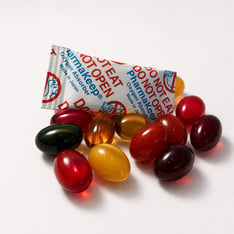
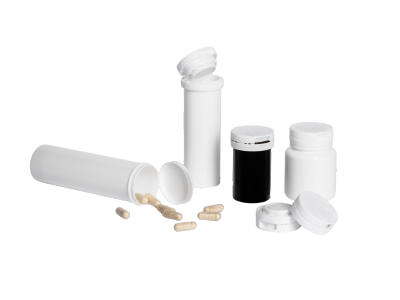
While antioxidants can help slow oxidation, packaging solutions can provide an additional layer of protection. Colorcon's PharmaKeep® oxygen scavengers help reduce oxygen levels within the package, while OXYNOV® Barrier Bottles provide enhanced oxygen barrier performance for sensitive formulations. Together, these technologies can help support product stability, extend shelf life, and preserve the quality of fish oil and omega-3 softgels.
 Color as a Competitive Advantage
In today's supplement market, consumers are evaluating products not only on efficacy, but also on ingredient transparency and overall product appeal. As demand for clean-label products continues to grow, many brands are exploring naturally sourced alternatives to synthetic colors.
For softgel products, color can:
- Differentiate product lines
- Reinforce brand identity
- Enhance shelf appeal
- Support premium positioning
- Align with clean-label initiatives
- Help protect light sensitive actives
Softgel manufacturing presents unique challenges for color stability, exposing pigments to prolonged heat and hydrated gelatin during processing. Colorcon evaluates pigments for any color change over a 72 hour hold time in the heated gelatin dispersion, ensuring color consistency from the first capsule to the last capsule in a single batch. This rigorous testing enables us to provide expert technical guidance and confidently recommend color solutions that maintain their appearance throughout processing and storage.
Colorcon's Opatint® Liquid Color Concentrates provide formulators with a broad range of color options, including naturally sourced solutions that help brands meet evolving consumer preferences while maintaining color consistency and manufacturing efficiency.
Whether developing an omega-3 supplement, vitamin D product, or wellness-focused formulation, color should be considered an important part of the development process rather than an afterthought.
 Think Beyond Development and Plan for Commercialization
A softgel formulation that performs well in the laboratory may face new challenges during commercial manufacturing. Factors such as process consistency, ingredient supply, regulatory requirements, and long-term stability should all be considered early in development.
For companies evaluating multiple dosage forms, Colorcon's Innovation Center in Irvine, California offers product development support, including pilot-scale softgel, gummy, and softchew processing capabilities, helping customers evaluate delivery-system options and accelerate product development.
Final Thoughts
 Developing a successful softgel supplement involves much more than encapsulating an active ingredient. From selecting the right delivery system and ensuring stability, to choosing effective packaging and creating a visually appealing product, each decision can influence long-term performance and consumer acceptance.
As demand for clean-label products continues to grow, formulators must balance stability, appearance, and functionality to create products that stand out in a competitive marketplace. With expertise in formulation technologies, packaging solutions, and color systems such as Opatint® Liquid Color Concentrates, Colorcon helps customers develop softgel products that deliver on both performance and appearance.
Frequently Asked Questions
What are softgel capsules used for?
Softgel capsules are commonly used for oil-based actives, fat-soluble vitamins, omega-3s, CoQ10 and other nutraceutical ingredients that benefit from liquid or semi-solid delivery.
Why is stability important in softgel formulation?
Stability is important because oxygen, moisture, heat and light can affect ingredient potency, capsule appearance and overall product quality.
How can packaging help protect softgel supplements?
Packaging solutions such as oxygen scavengers and high-barrier bottles can help reduce oxidation, preserve freshness, and support longer shelf life.
What is fill-shell compatibility in softgels?
Fill-shell compatibility refers to how the softgel fill material interacts with the capsule shell during storage, which can affect leakage, hardness, dissolution and shelf life.
Why does color matter in softgel supplements?
Color can improve shelf appeal, support brand differentiation, align with clean-label preferences and help protect light-sensitive ingredients.


.png)